
When the power goes out at a rural home, the lights are usually the least of your worries. The furnace stops, the well pump stops, and the sump pump stops just as heavy rainfall starts to fill the basement. A home backup generator is a permanently installed unit that starts automatically during an outage and powers the systems you choose. Good planning for a rural or semi-rural home starts with a simple question that many people skip: what does your house actually need to keep running? Below, we walk through how to answer it, why automatic operation matters when no one is home, what second-home owners should plan for, how to think about budget, and what our team handles for you.
Start With What Your Home Backup Generator Needs to Power
Before anyone talks about generator sizes, list the loads you can’t go without. Generac groups home loads into essentials, comforts, and high-draw systems, and that’s a useful way to sort your own list. Here’s a short checklist to work through for your house:
- Heat and its controls: Most furnaces and boilers need electricity for their igniters, controls, blowers, and circulator pumps, even when they burn oil or propane. Heat pumps run entirely on electricity.
- Well pump: If your home is on a private well, you have no running water during an outage until the pump has power again.
- Sump pump: If your basement fills with water in spring or during heavy rain, you need your sump pump running during an outage, especially if it’s caused by a storm.
- Refrigeration: A refrigerator and freezer full of food can spoil over a multi-day outage.
- Medical equipment: Generac recommends planning for devices such as CPAP machines and oxygen concentrators from the start, because some sensitive equipment is affected by power quality.
- Home office: If you work from home, your internet equipment, computer, and lighting may belong on the list.
Your answers to this checklist shape every other decision, including generator size and how much of the house to cover. Motors in well pumps, sump pumps, and air conditioners also need a short burst of extra power to start, often 2 to 3 times their running power, so we account for that when we size a system.
Manual Set Up vs. Automatic Backup Generators
There are 2 general ways to get backup power for your house.
Manual Setups With a Portable Generator
A portable generator puts the work of every outage on you. It connects through a manual transfer switch or an inlet an electrician installs, and someone has to haul the generator outside, start it, connect it, switch the circuits over, and keep it fueled. During an ice storm or a nighttime outage, that means working outside in the cold and the dark. The U.S. Consumer Product Safety Commission (CPSC) advises running a portable generator outside only, at least 20 feet from the house, and never in a garage, basement, or shed, because carbon monoxide in its exhaust can be deadly.
A portable generator also typically powers only a limited set of circuits. If no one is home when the power goes out, it can’t start, and the house goes without heat, water, or a working sump pump until someone arrives.
Automatic Standby Generators
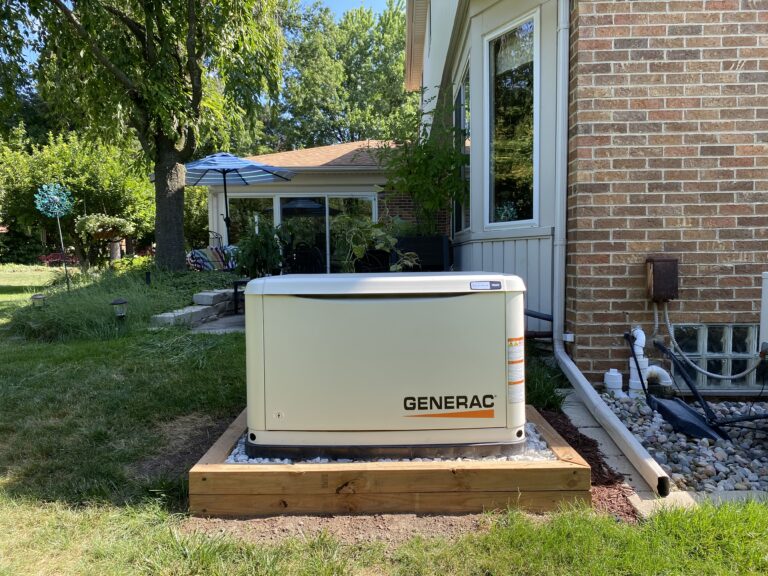
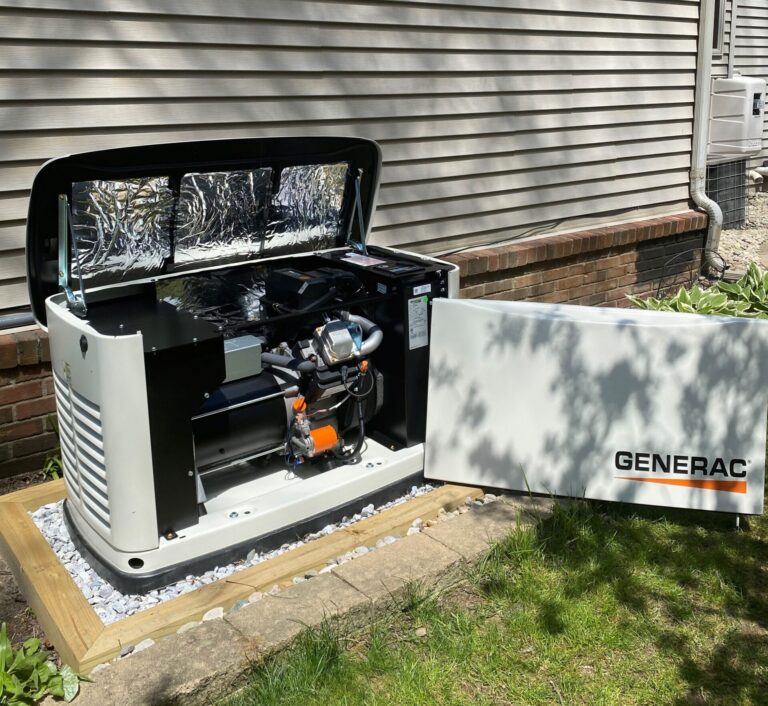
An automatic standby generator handles an outage on its own. It connects to your natural gas line or propane tank, so you don’t have to carry or pour fuel, and it connects to an automatic transfer switch (ATS). This means the ATS senses the outage, disconnects your house from the utility line, starts the generator, and switches your circuits to generator power without anyone stepping outside. Generac standby generators restore power within seconds and run when you’re home or away. When utility power returns, the generator shuts itself off and waits for the next outage.
An automatic standby generator protects your home during work hours, overnight trips, and a winter away, when no one is there to start a portable generator.
Emergency Generator Readiness for Seasonal and Second Homes
Many homeowners across New Hampshire’s Upper Valley and Sunapee Region, and here in Vermont, own a lake house, a ski-season home, or a camp they visit only part of the year. An outage at an empty house can go unnoticed for days. Without heat, pipes can freeze and burst, and a basement can flood once the sump pump stops.
An emergency generator for home use at a second property needs to work without anyone there. A standby generator handles that with automatic startup, and remote monitoring lets you check on it from wherever you are.
Remote Monitoring With Mobile Link
Generac’s Mobile Link app sends real-time alerts about your generator’s status, lets you manage its exercise schedule, and can connect you with your service dealer. It can also monitor your propane supply. A home Wi-Fi connection can drop during an outage, and Generac offers a cellular accessory that keeps monitoring running when that happens. We cover setup and alerts in our post on how to monitor your Generac generator.
Maintenance Plans for Part-Time Homes
A generator at a part-time home should be serviced on a regular schedule, since no one is around to notice a problem. Our generator maintenance plans cover the oil changes, filters, and inspections that keep it ready. For a second home, we recommend pairing a standby generator with remote monitoring and a maintenance plan, so you’ll hear about a problem before it becomes frozen pipes.
Planning the Budget for a Home Backup Generator
Generac notes that the generator’s price is only part of the total. Professional installation, permits, a concrete pad, gas-line or propane-tank work, and electrical work all add to the installed cost. Your checklist from the first section has the largest effect on that total, because covering the whole house generally takes a larger generator than covering selected circuits.
The most accurate budget comes from an itemized quote based on your home’s loads, your fuel source, and where the generator will sit. If you’d like to spread out the cost, we offer generator financing options that we can walk through with you along with your quote.
How VGS Helps You Plan a Backup Home Power System
Vermont Generator Systems is an authorized dealer for Generac backup generators, and our in-house team handles each step of the project:
- Contact: You fill out a short form, and we reach out to learn about your home, your outage concerns, and what you want to power.
- Site visit: A generator specialist reviews your electrical system, your property layout, and your fuel source.
- System design: We recommend a generator size and coverage plan based on your checklist and what we find on site.
- Permitting: We manage the required permits and coordination, so everything is approved before installation begins.
- Installation and support: Our technicians install and test your generator, review how it works with you, and provide ongoing service.
Our standby generator installation page covers each step in more detail.
Schedule a Site Visit With Vermont Generator Systems
Vermont Generator Systems has served homeowners across Vermont and New Hampshire since 2004 from our base in Hartford, Vermont. We’re an authorized Generac dealer, and our in-house, certified technicians handle your project from the first site visit through permitting, installation, and annual service. We take a zero-pressure, educational approach, so your site visit is a conversation about your home and what it needs to keep running, and you’ll get a clear recommendation for the best backup power generator option for your home. You can learn more about whole-home backup generators in Vermont and New Hampshire on our site or call us at (802) 698-8125.
Sources
Generac Power Systems. “Home Standby Generator FAQ.” https://www.generac.com/home-standby-generators/faq/
Generac Power Systems. “What Size Generator Do I Need?” Updated August 9, 2026. https://www.generac.com/resources/home-management/what-size-generator-do-i-need/
Generac Power Systems. “Reliable Generator Monitoring With Mobile Link.” https://www.generac.com/home-standby-generators/wifi-generator-monitoring/
U.S. Consumer Product Safety Commission. “Winter Storm May Knock Out Power; CPSC Warns of Deadly Carbon Monoxide and Fire Risks.” 2026. https://cpsc.gov/Newsroom/News-Releases/2026/Winter-Storm-May-Knock-Out-Power-CPSC-Warns-of-Deadly-Carbon-Monoxide-and-Fire-Risks